
I think the first book I read by Octavia Butler was Kindred, but since then, her Patternist series, and Wild Seed, in particular, have become my favorite novels by her. Recently, I saw that Project Row House’s Houston Reads Book Club would be reading Clay’s Ark, the second to last book in the Patternist series. So decided to reread it.
While rereading Clay’s Ark by the pool, I began noticing that Butler mentioned the moon more than once. I noted when, where, and what she mentioned about the moon…whether it was waning, waxing, or full….which plot events the moon-sighting coincided with.
The moon is full when Blake, one of the protagonists, sees his youngest daughter for the first time since his small family was taken by another family that has long been infected with a virus-like, alien organism. The organism came from a botched space voyage that ended in a crash back to Earth. The virus could easily spread across what is left of the planet in the year 2021 if not contained on the farm the infected family maintains. (Clay’s Ark was written in 1984, so yes, Octavia was quite the scholar/prophet). Blake knows that he is infected with whatever afflicts the family, and, while gazing at the full moon, realizes that his youngest daughter is next. The family was kidnapped days ago for that very reason–the infected needed more friends, and the virus needed more hosts. Now they had them. Full moons mark completions.
I mention the moon because authors like Octavia Butler do as well. Its rotation around the Earth marks events in her characters’ lives, much like it does ours.
As I write this we are experiencing a New Moon in Taurus. A New moon is when the moon has moved to the point along its orbit where it is no longer visible to us on Earth:
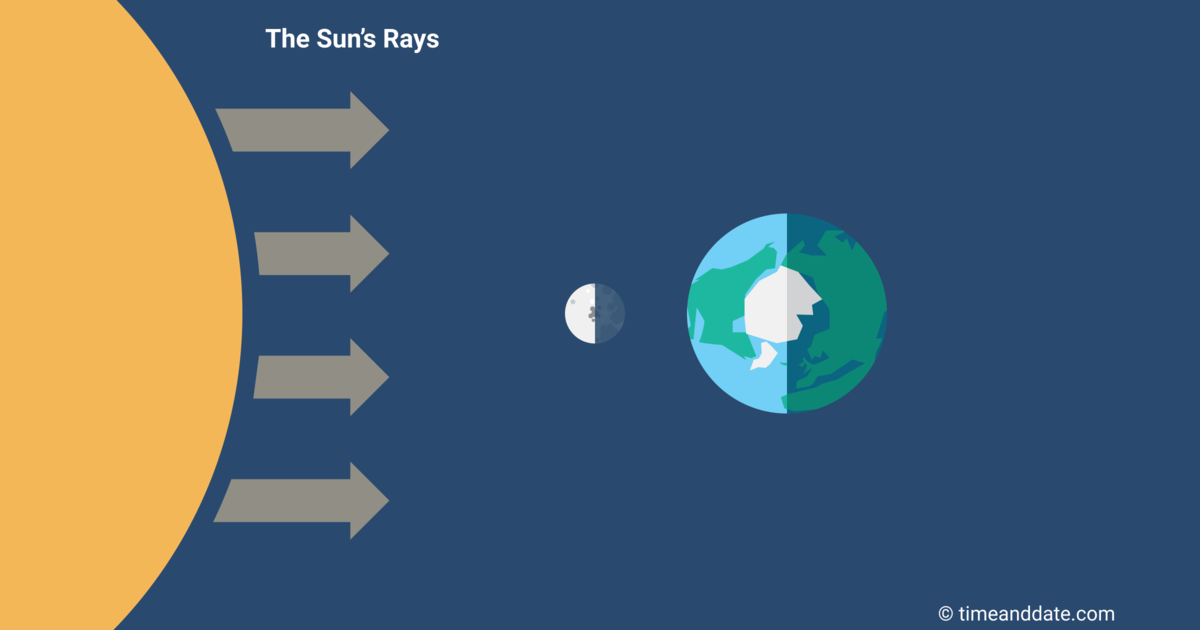
“The moon is in Taurus” means that it is positioned within the Taurus constellation in the night sky (where it will stay for around two days). Since the beginning of time, folks have pondered our place among the stars and named the patterns they see in the night sky. Doing so (while staying grounded) helped ancient people mark time, event, and circumstance (shout out to the *Star* of Bethlehem!)
The moon is one of the faster-moving bodies spinning around up there. The gravitational pull of the moon wavers along its orbit, affecting the Earth’s ocean tides (think: waves). This is in part because the planets and their moons are made up of at least some of the same elements as you and I (think of the Periodic Table). There are bits of water in us, too. The phases of the moon can coincide with the phases of women’s menstruation and other hormonal balances within men/women/folks. We’re all configurations of star dust/matter, in different amounts and proportions. You can thank God or the Big Bang for that (or both).
Astrology and Astronomy are disciplines as much as any academic topic like Physics or Sociology, and there exists discourse around sidereal/tropical readings of the planets in Astrology–by that I mean that sidereal astrologists like The People’s Oracle acknowledge that this May 11th New Moon is in the Aries constellation. There are a multitude of ways to interpret, measure, analyze, or read planetary bodies. I think one should go with whatever reading resonates–and more importantly, be aware of why one form of reading may resonate more for you than another.
I’ve digressed a bit here to highlight the ethos that arises when you, me, or characters in books written by prolific authors encounter the moon. We love our Luna. Whatever the constellation, New Moons mark beginnings. And full moons mark fruition, or the completion of cycles.
This Taurus new moon, I’m setting an intention to share my musings with more consistency–and compensation (shout out to Taurus, a constellation associated with pleasure, sensuality, and the money that enables us to indulge *or Aries, known for firsts/fresh starts). If you’ve enjoyed this little bit written at 10:30 PM on a Tuesday, consider subscribing to my other writings, which engage my readings/research on Afro-futuristic texts, sociology, history, and experiences.
Here’s to new beginnings. And to recognition that our bodies deserve proactive and preventive care, like pool time—and don’t forget sunscreen and mosquito spray.
 chavonte t. wright
what’s on your mind? (please be kind)